Can You Use Your Bathroom During Renovation?
Expect interruptions to the toilet, shower and water supply; agree alternatives before work starts.
Ask about each fitting separately
There is no reliable yes or no answer for every bathroom renovation. A room might have a working toilet while its shower is disconnected, or the whole room may be closed during floor preparation. Ask the installer which fittings will be available at each stage. Do not assume that water at the kitchen tap means the bathroom can be used.
The answer depends on the work in the quote, the room's condition and how the plumbing is arranged. Replacing a basin is different from stripping the floor and moving the toilet. Get the expected interruptions explained before the starting date, particularly if the bathroom is the only one in the property. Include evenings and weekends in that conversation.
Make a realistic toilet arrangement
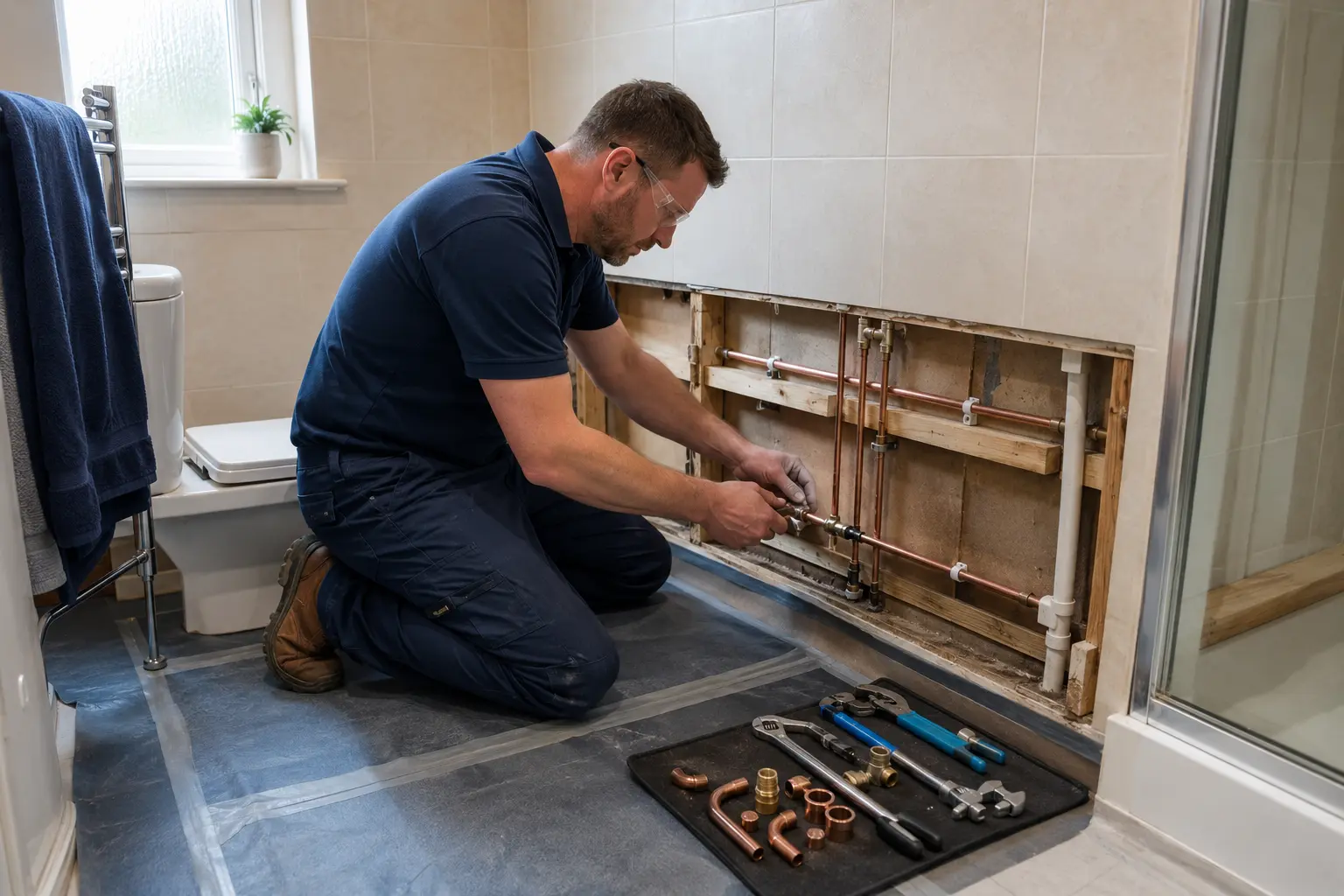
A toilet sometimes needs to be removed to prepare the floor or alter its connection. Ask whether it can remain usable at any point and what would prevent that. Refitting it temporarily is not always practical or included. A promise that it will be put back every night should only be relied on if the installer has specifically agreed it.
Arrange another toilet that the household can actually reach when needed. Consider night-time use, children and anyone with limited mobility. A neighbour's bathroom may help occasionally but may not be a suitable plan for several days. If the available alternative will not work, discuss the installation arrangements before accepting a date rather than hoping to manage later.

Plan where everyone will wash
Once a bath or shower has been disconnected, keep it out of use until the installer confirms it is ready. A tray sitting in position may still need its connection, screen or sealing completed. Water can reach unfinished walls and floors quickly, so appearances alone are not a useful guide to whether showering is safe.
Think through the practical alternative for each person. Access to another bathroom, a family member's home or other suitable facilities needs arranging in advance. Keep washing supplies and clean towels outside the work area. If a household member needs assistance, check that the alternative has the space and support required, not just a working shower.
Expect some interruptions beyond the bathroom
Turning off a shared water supply may affect the kitchen or another bathroom while connections are made. Ask for notice so you can prepare ordinary drinking and washing water. Tell the installer about any household need that makes an unexpected interruption difficult. Do not operate valves that have been turned off for the work without agreement.
Electrical work can also require a circuit to be switched off. The qualified person doing that work should explain what is affected. Keep essential household routines in mind when planning access, but do not ask anyone to leave an incomplete connection live for convenience. The order of work needs to allow safe installation and testing.

Keep the work area separate from daily life
Even when a fitting is temporarily usable, the route to it may pass tools, uncovered surfaces or materials. Ask when entry is permitted and keep children and pets away from active work. Do not move coverings or stacked products to make a path yourself. A clear route should be agreed with the people working in the room.
Dust and noise can extend beyond the bathroom. Move medicines, toothbrushes and towels to a clean storage place before work begins. Agree floor protection and end-of-day tidying, especially where the route crosses a bedroom or shared hall. Those arrangements reduce inconvenience, but a renovation still means part of the home is a working area.
Keep the household informed
Write down the agreed interruptions somewhere everyone at home can see. Include any instruction to leave a fitting unused, even if it appears connected. Visitors and children may not know that a new surface is still setting or that a drain has not yet been checked.
If the programme changes, ask for an updated explanation of what is available that evening and the next morning. A short practical update is more useful than an approximate finish date alone. Reconfirm access with the installer before using the room after a day of work, rather than assuming yesterday’s arrangement still applies.
Wait for the go-ahead on new surfaces
Fresh sealant, adhesives and grout can need time before they are exposed to water or regular use. Follow the actual product and installer instructions rather than a general time found online. Ask separately about showering, using the basin and washing the floor. The correct waiting period may differ between parts of the same room.
At handover, have the controls and drainage checks explained and keep the care instructions. If a delay or hidden repair changes the programme, revisit your temporary washing arrangement straight away. The aim is to know what you can use and when, with an alternative in place, rather than treating an unfinished bathroom as available because the main fittings look installed.
Planning this work in Derry? See our bathroom renovations in derry page for the service and how to request a quote.