How Long Does a Bathroom Refit Take?
The work needed, drying times and product availability determine the fitting schedule for your room.
Get a schedule for the actual work
A bathroom refit does not have one fixed duration. Keeping the layout and fitting wall panels can involve different work from moving the toilet, repairing a floor and tiling the whole room. Ask for an expected schedule based on your accepted quote. A headline estimate for an unspecified bathroom is not enough to organise the household around.
Separate the waiting time before installation from the time spent working in the room. Measuring, choosing products and arranging deliveries may happen before a fitting date is agreed. Ask what still needs to be decided and whether the essential items have arrived. Starting demolition before those questions are resolved can leave the bathroom unavailable for longer than necessary.
Removal reveals what needs preparing
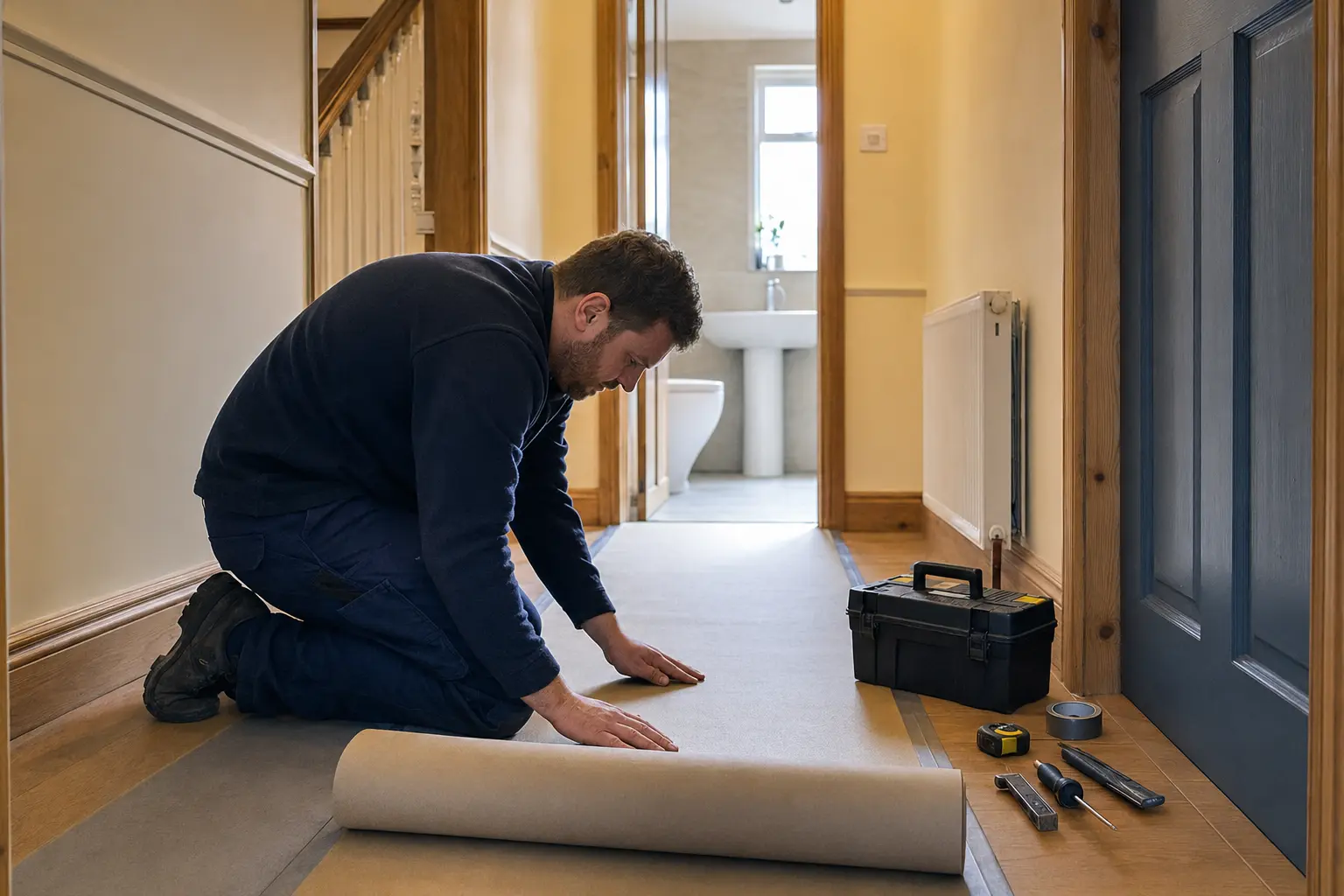
The first stage usually involves disconnecting and removing the agreed old fittings and finishes. The amount being removed matters: changing a shower enclosure is different from taking the room back to bare walls. Access through stairs or narrow halls and arrangements for waste collection can also affect how this work is organised.
Once surfaces are exposed, the installer can check areas that were hidden at the survey. A damaged floor, leaking connection or loose wall material may need attention before installation continues. Ask how you will be shown any problem and told about the repair, cost and timing. A change should be explained clearly, rather than silently added to the programme.
Plumbing and electrical work come before closing walls
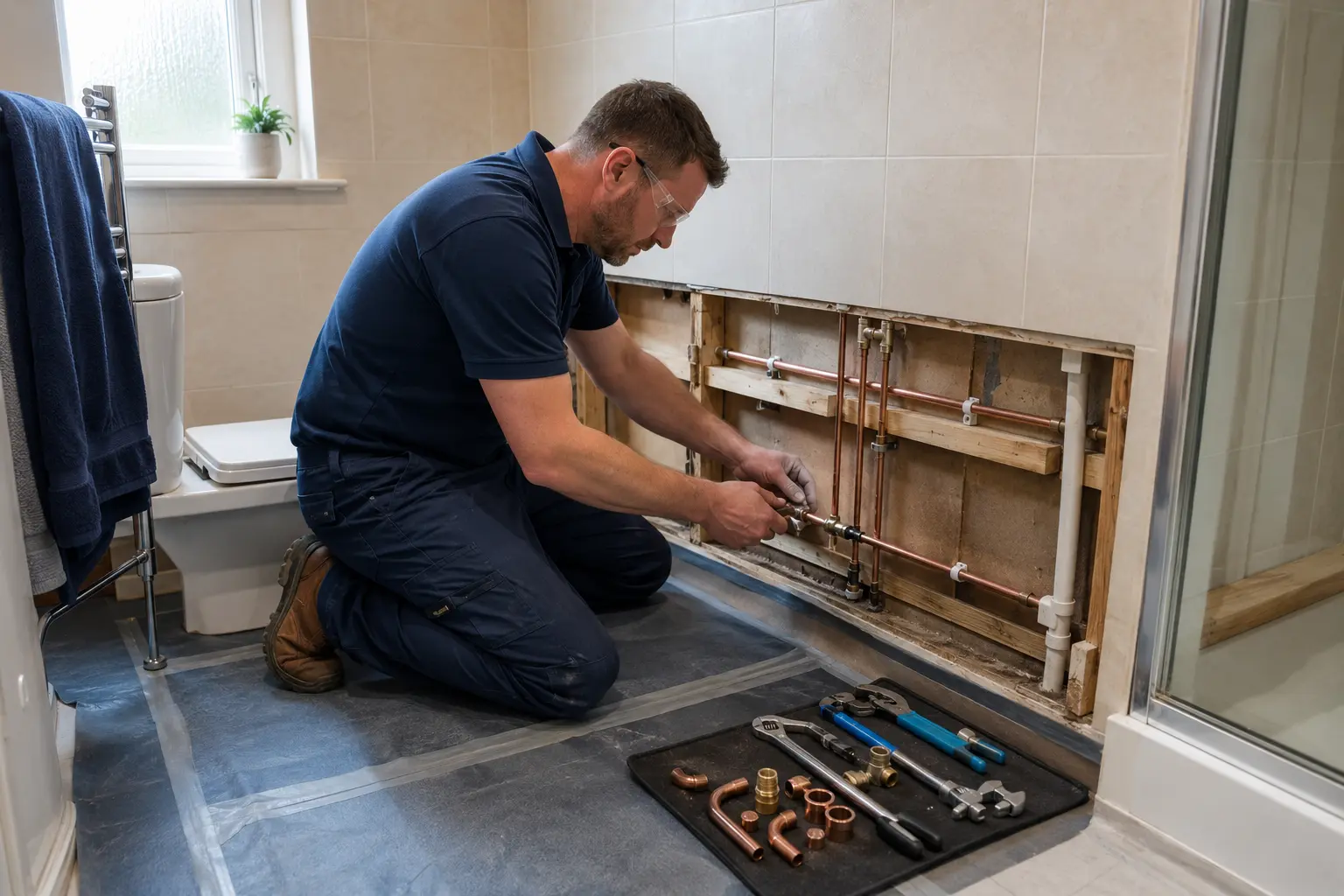
Pipes and cables often need attention before new wall finishes are fitted. Moving a basin, shower or towel rail can add work compared with keeping a sensible position. The connections still need checking when the layout remains the same. Retaining a location does not prove that every old fitting or pipe is suitable for reuse.
Different trades may be needed, and their visits have to fit the order of work. Ask who is arranging them and whether those visits are included in the proposed schedule. Decisions about mirror lighting, shower controls and furniture should be made before the wall is closed. Late changes can mean reopening completed work and revising the finish date.
Allow the surfaces to be prepared properly
Walls and floors must suit the products being fitted. Some need repairs or levelling before panels, tiles or flooring can go down. The chosen materials may also require drying or setting time. Ask which stages need waiting time so an apparently quiet day is not confused with work being abandoned.
Larger tiles, detailed patterns and awkward corners can take more fitting time than a simple finish, but neither panels nor tiles should be rushed. The product instructions determine suitable preparation and installation. A quicker-looking wall covering will not solve damp damage underneath. The timetable should allow the cause of a problem to be addressed before it is covered.
Product problems can change the order
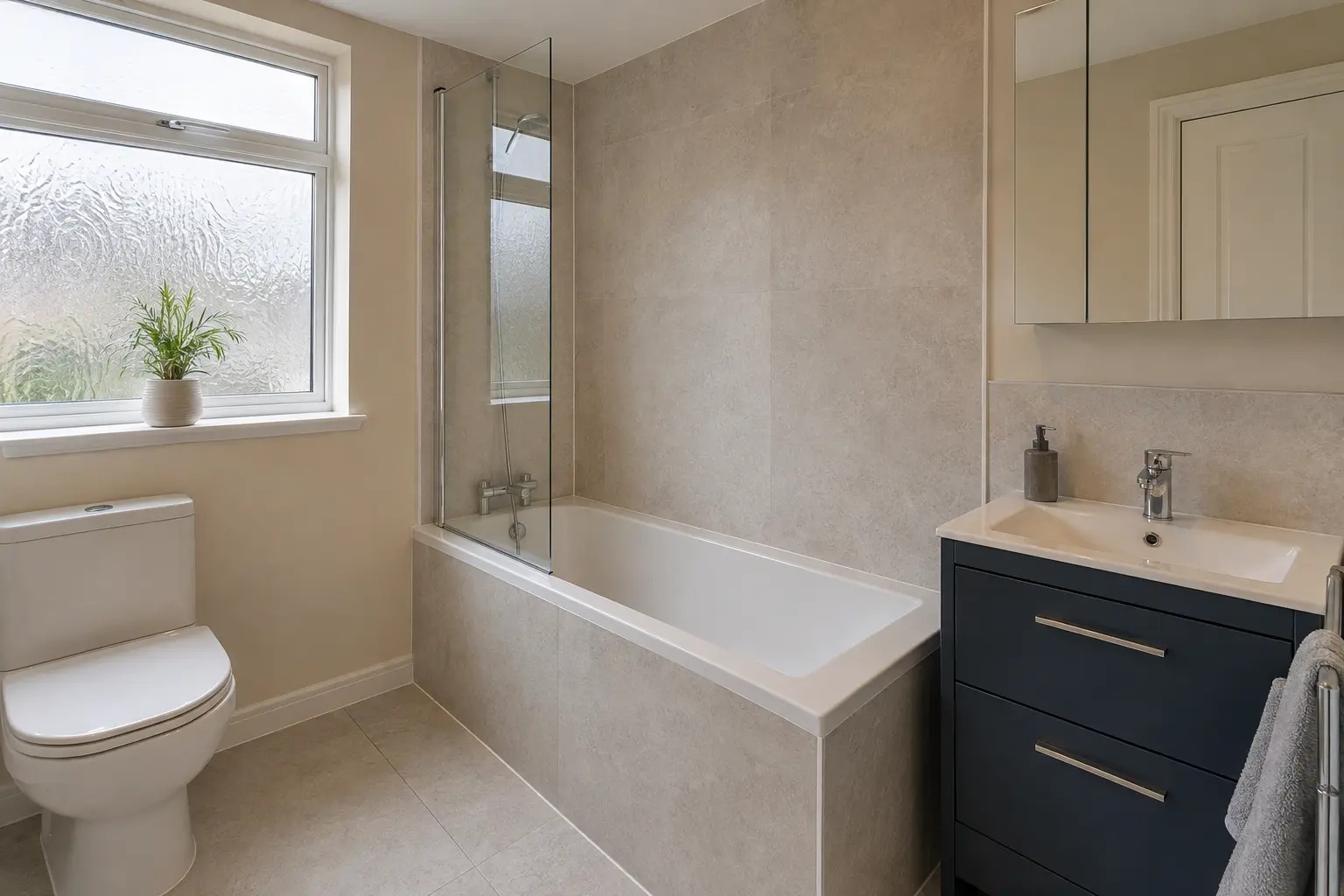
A damaged basin or missing shower part can hold up a later stage even if most of the bathroom has arrived. Agree who checks deliveries and who handles replacements. Keep model numbers and the accepted product list accessible. Substituting a different item may affect measurements, connections or appearance, so it should be discussed before fitting.
If you supply an item yourself, confirm its suitability and arrival date with the installer. A late delivery can create the same delay as an unavailable trade. Ask whether work can continue elsewhere if something is missing, but do not assume the planned finish date remains possible. The revised position should be explained as soon as it is known.
Ask for updates that explain the next stage
Agree how progress will be discussed while the room is out of use. Ask what has been completed, what comes next and whether any decision is needed from you. If a delivery or repair changes the sequence, find out how it affects the facilities the household can use.
Avoid arranging another trade to work in the same space without checking first. Their access or materials may interfere with bathroom work already planned. Keep changes to the schedule and product list together so everyone is working from the same information, particularly when more than one person is making decisions at home.
Include testing and the first usable day
The final stage includes checking connections, drainage, controls and the agreed finish. Allow time to identify and address anything needing attention. Ask for product instructions and an explanation of cleaning and access to parts that may need repair. A room can look nearly complete while these checks are still outstanding, so photographs alone do not confirm it is ready.
Also ask when each fitting can first be used. New seals and surfaces may require a waiting period after fitting has ended. Plan another toilet and washing arrangement around that date, especially where there is only one bathroom. A useful schedule tells you both when work is expected to finish and when the household can safely return to its normal routine.
Planning this work in Derry? See our bathroom installation in derry: step by step page for the service and how to request a quote.