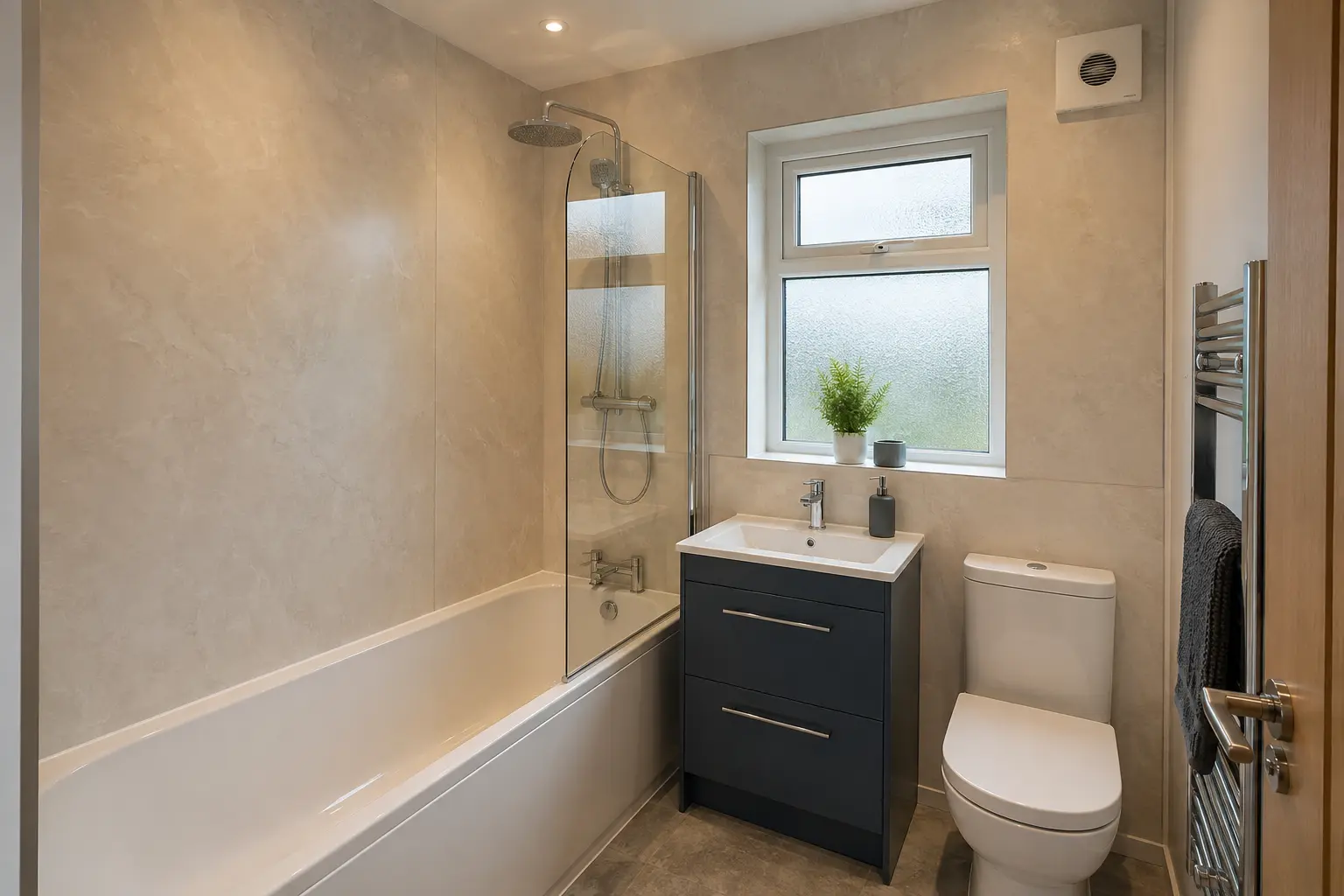
Choosing Bathroom Surfaces That Are Easier to Clean
Compare the joints, textures and reachable edges, as well as how a finish looks.
Begin with what makes cleaning difficult now
Think about the parts of the existing bathroom that take the most effort. It may be grout, a narrow gap beside the toilet, bottles around the bath or a screen you cannot reach behind. Name those problems during the design appointment. Choosing a different colour alone will not solve a layout that makes ordinary cleaning awkward.
Consider who cleans the room and what they can reach comfortably. A finish should suit the household's routine, not require products or access that will be difficult to manage. No bathroom is cleaning-free, but good product and layout choices can remove unnecessary corners, crowded edges and places where water or toiletries collect.
Compare smooth finishes and visible joints
Bathroom wall panels generally have fewer joints than a wall covered in small tiles. They still need care at corners, edges and seals. Ask how the selected system is cleaned and what products must be avoided. Do not assume that every panel has the same surface or accepts the same treatment because it is sold as wet wall.
Tiles vary in texture, size and material. A deeply textured finish may take more attention than a smooth one, while grout joints remain part of the cleaning routine. Larger tiles can reduce the number of joints but must suit the room and supporting surface. Compare actual samples and installation details rather than choosing by size alone.
Leave access around fittings
A basin or toilet squeezed tightly beside furniture may create a gap that is difficult to wipe. Check the usable space around the selected products and how their sides can be reached. A layout that fills every available centimetre can create more work than a slightly smaller fitting with clear access around it.
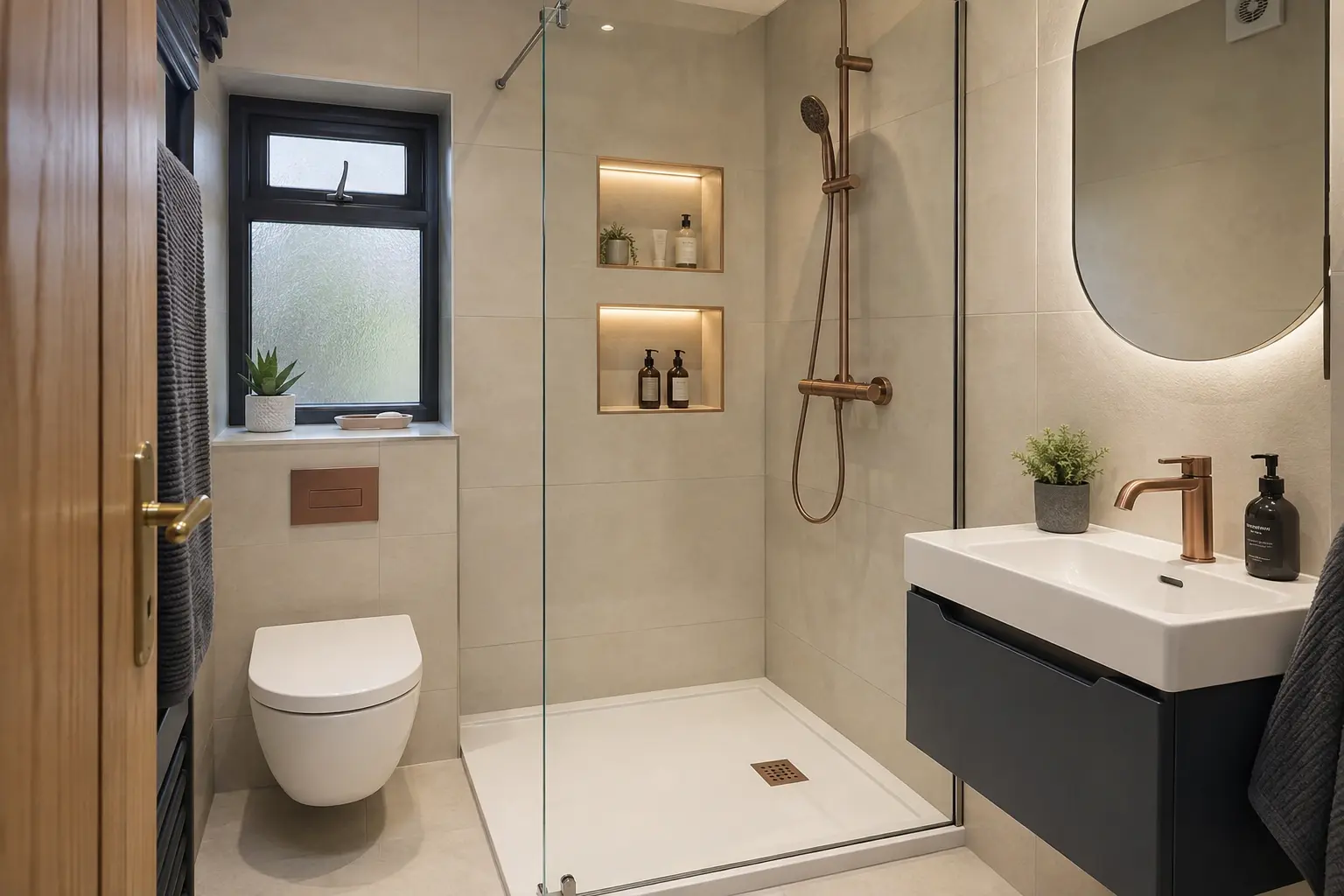
Wall-hung furniture can leave floor space visible, but it is not automatically easier for everyone to clean beneath. The height and depth matter, as does the person's reach. Ask how the product is supported and how parts behind it can be reached for repairs. Choose useful storage and accessible edges rather than relying on a style label as a guarantee of easier upkeep.
Plan shower storage and drain access
Bottles on a shower tray can collect residue and get in the way. A suitable shelf or carefully built recess gives them a place without using the standing area. Check that it can be reached and cleaned. Recessed shelving in a wet wall needs the proper construction and sealing, not simply a cut-out added after the finish is complete.
Have the drain cleaning arrangement explained before choosing the shower. You need to be able to remove and clean the drain parts described in the instructions. A fixed screen should not make routine cleaning impossible. Think about how you will reach corners and the far side of the glass, especially where the shower entrance is narrow or furniture stands nearby.
Check glass and metal care instructions
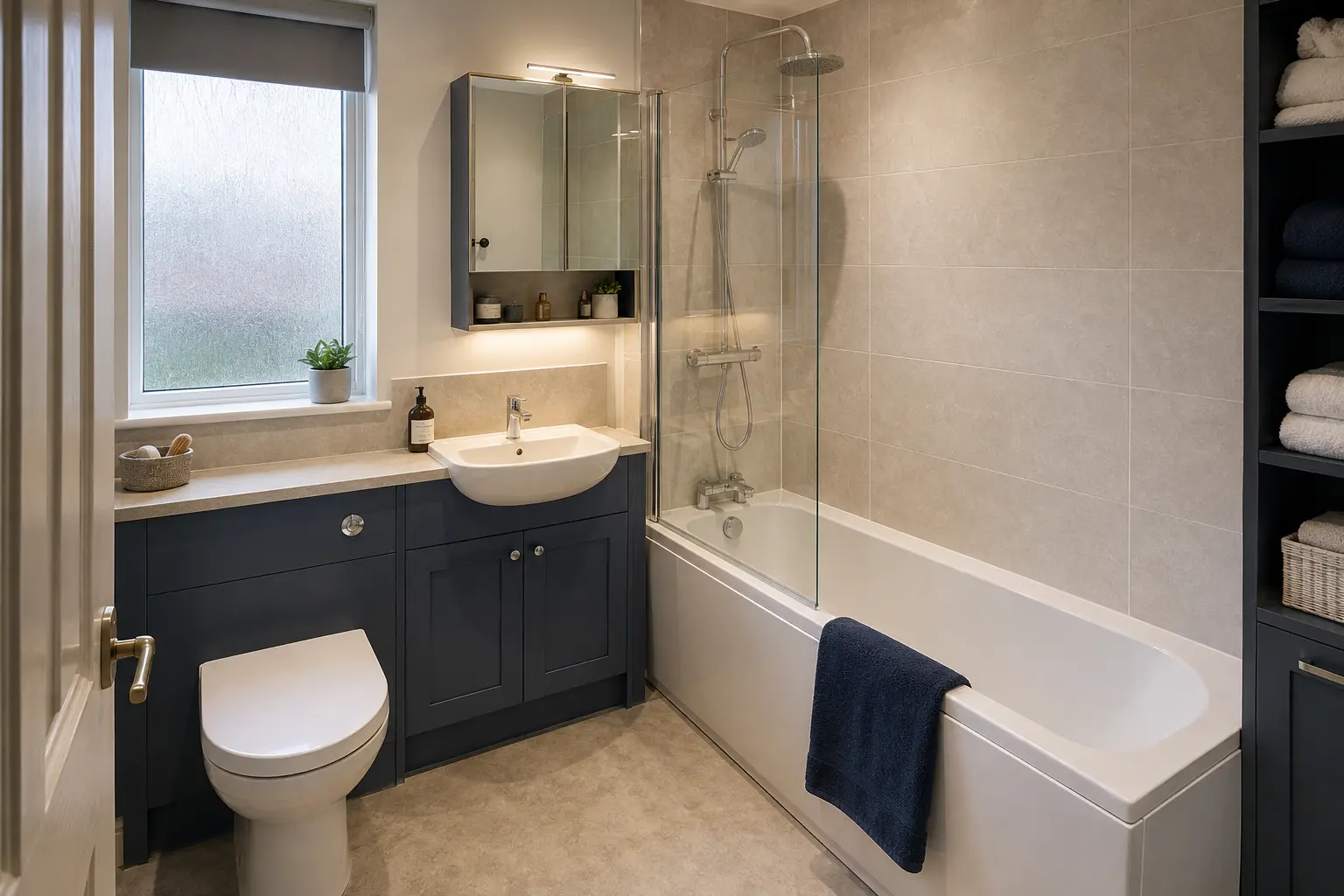
Glass coatings can affect cleaning, but they do not mean a screen never needs attention. Use the guidance for the exact product and avoid assuming that a household cleaner is suitable for every coating. Consider the hinges, supports and lower edges as well as the large glass surface. Those smaller details can influence everyday cleaning effort.
Brass, chrome and other metal finishes may have different care requirements. An attractive tap should still be practical for the household. Keep the supplied instructions and avoid abrasive pads or chemicals unless the manufacturer permits them. If several finishes are used in one room, make sure the cleaning routine is suitable for each rather than treating them all alike.
Choose flooring for both use and upkeep
Bathroom flooring needs to suit the intended area, including the expected water exposure. Ask how slippery it may be when wet and how to clean it for the actual product. A surface described as easy-clean is not automatically suitable inside a shower, and a textured surface may need a particular cleaning method. Suitability comes before an appearance that seems convenient in a showroom sample.
Check joins, edges and the transition at the doorway. Water left standing and residue from unsuitable cleaners can cause problems even on a suitable floor. Follow the maintenance instructions and investigate leaks rather than repeatedly drying the same patch. Do not put a new finish over damp or unstable material without addressing the cause.
Reduce clutter and keep the paperwork
Useful drawers, shelves and towel storage make it easier to clear surfaces for cleaning. Decide what needs to stay within reach and what can be stored elsewhere. A vanity that holds daily items may be more useful than several decorative ledges. Check drawer space around plumbing so the storage you expect is actually available after fitting.
Keep product names and care instructions together when the bathroom is handed over. Ask about the first cleaning and any waiting time for new seals or finishes. Report damaged seals, opening joints or unexplained damp promptly. Easier upkeep comes from suitable surfaces, manageable storage and access, with repairs handled before water reaches areas it should not.
Planning this work in Derry? See our bathroom design in derry page for the service and how to request a quote.