Wet Wall Panels or Tiles for Your Bathroom?
Compare the installed finish, wall preparation, joints and cleaning before choosing panels or tiles.
Compare complete wall systems
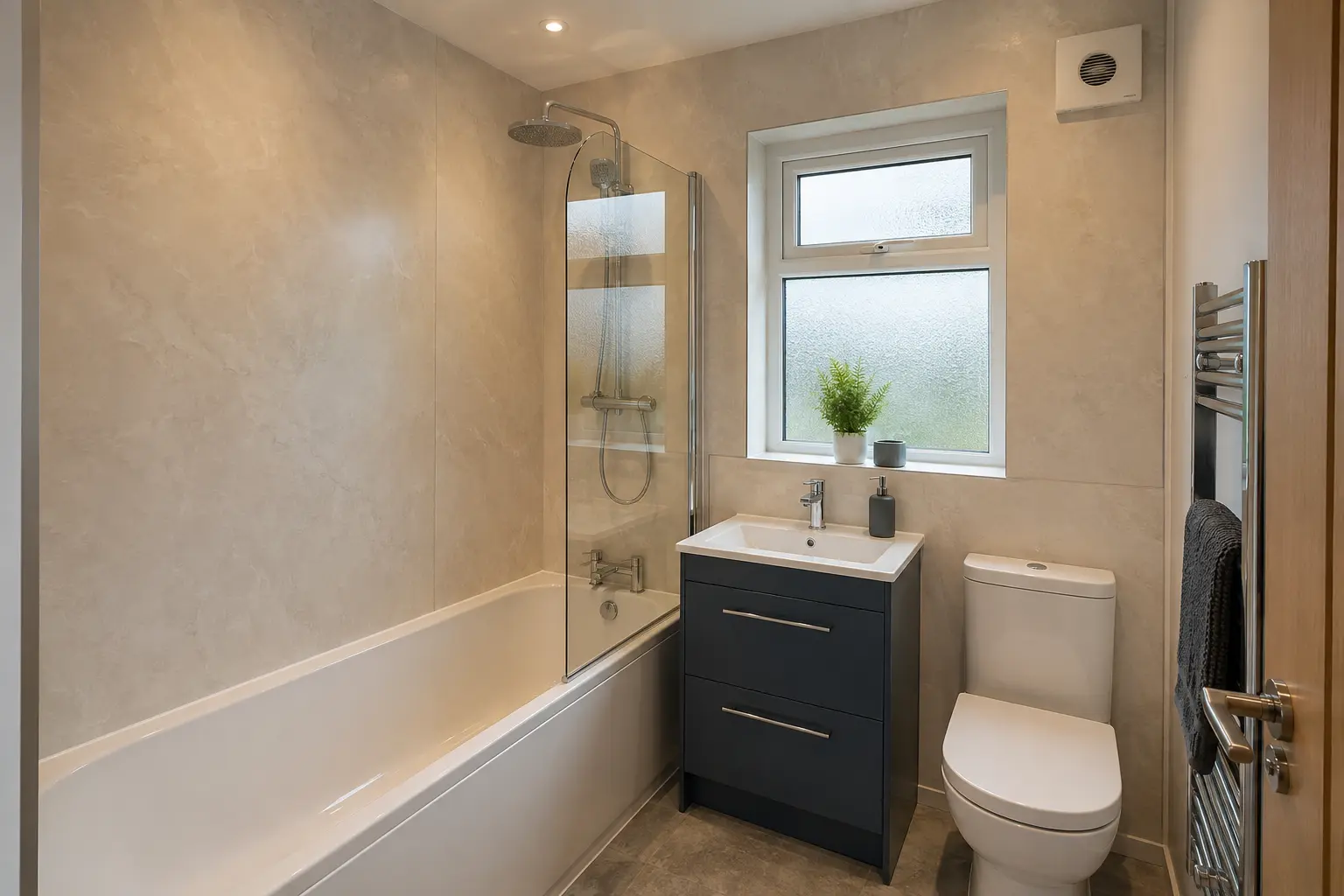
Wet wall is a common name for bathroom wall panels. They are available in different materials, sizes and finishes, so the name does not describe one identical product. Tiles also vary in material, size and care requirements. Compare the actual products offered, including the preparation and fitting system, rather than deciding that one broad category is always better.
Start with where the finish will go: inside a shower, around a bath or on a drier wall. The chosen product must be suitable for that location and installed as instructed. Ask which boards, adhesives, edge strips and seals are required. The visible surface is only part of a bathroom wall that needs to remain securely fitted and protected from water.
Look at joints and edges in the room
Large panels usually mean fewer visible joints than smaller tiles. That can simplify routine cleaning, but panels still have joins, corners and edges that need correct fitting and care. Ask to see how the chosen system finishes at a window, ceiling and shower tray. A small sample does not show all those details.
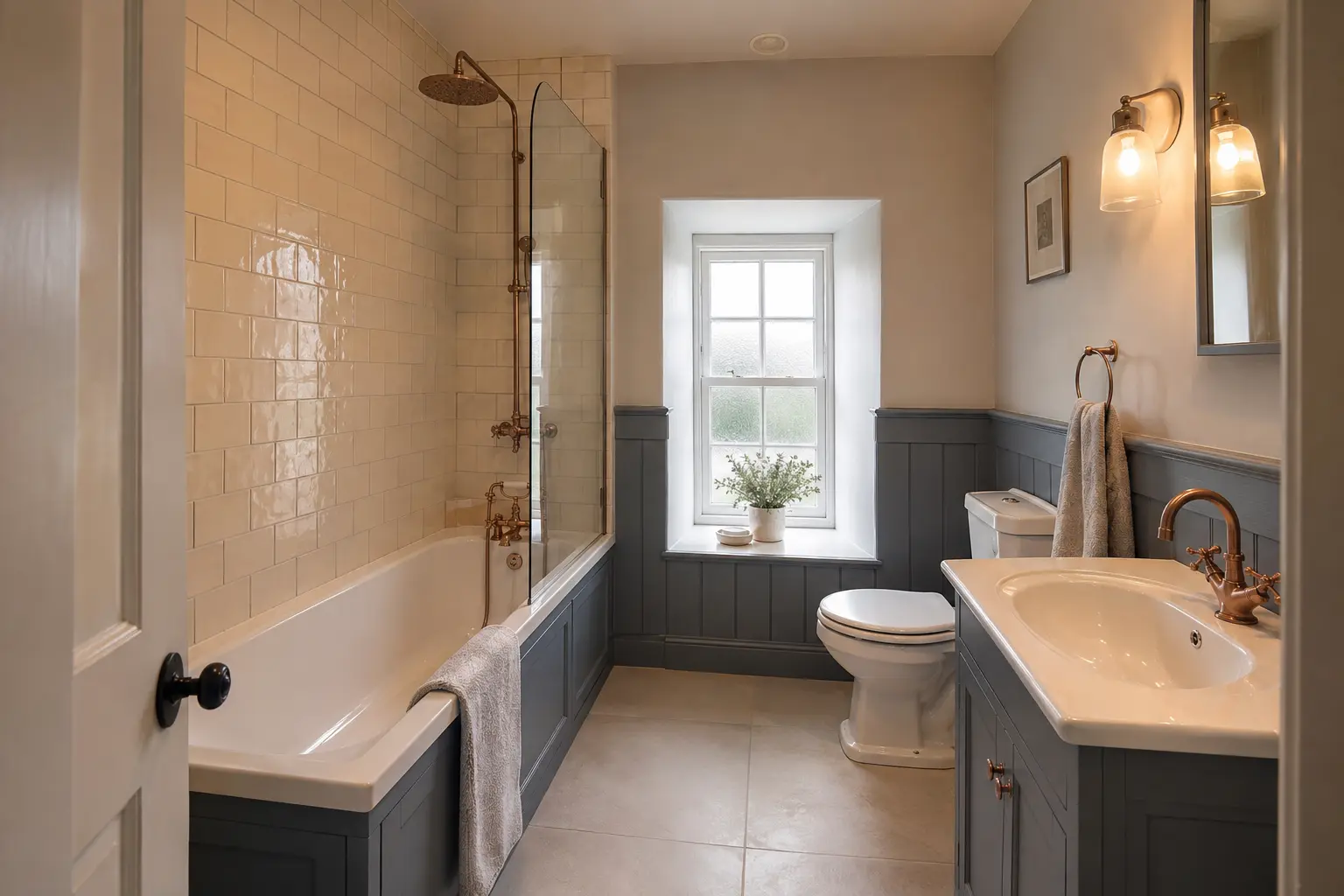
Tiles offer many layouts and patterns, with grout joints as part of the finished appearance. The size and pattern affect how the room looks and how much fitting work is involved. Think about awkward corners and narrow strips around fittings. A layout planned before installation can avoid an unwanted cut or pattern change in a prominent position.
Check the wall behind the new finish
Neither panels nor tiles should be used to disguise an unresolved damp or unstable wall. The supporting surface needs to suit the selected system. Some panels may be fitted over suitable existing tiles, but loose, damaged or unsuitable surfaces need attention. Ask what has been inspected and what preparation is included in the quote.
Removing the old finish can reveal problems that were hidden during the survey. Agree how extra repairs will be explained and priced. If a new lining changes the wall position, check the final dimensions around baths, trays and furniture. A product that fitted the original measurements may need reconsidering once preparation and the new finish are accounted for.
Consider everyday cleaning honestly
Panels can reduce the amount of grout to clean, but they are not maintenance-free. Follow the manufacturer's instructions for cleaning products and methods, and check the care of seals and exposed edges. Abrasive tools or unsuitable chemicals may damage a surface or finish. Keep the exact product details rather than relying on generic advice for all wall panels.
Tiles and grout have their own care requirements. Some materials need different treatment from others, and decorative textures can take more attention than a smooth surface. Think about who will clean the room and what they can reach. A finish that looks attractive in a sample should also suit the household's ordinary maintenance routine.
Compare full fitted prices
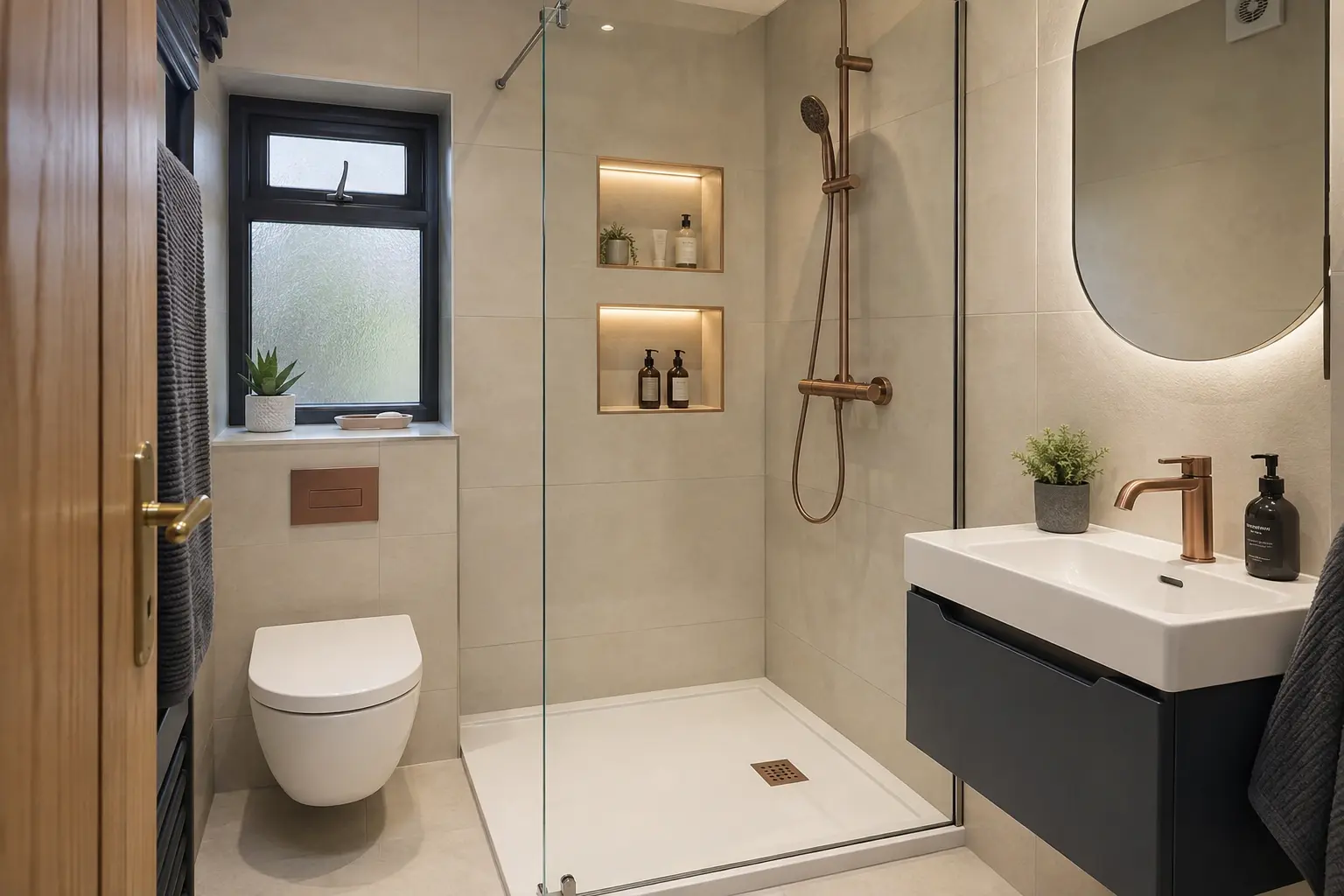
The cost includes more than the square metre price of a panel or tile. Preparation, removal, adhesive, trims, waterproofing where required and fitting all affect the total. Detailed tile layouts may take more work, while large panels need suitable access and careful handling. Ask for a quote based on the measured room and exact finish.
Check the allowance for offcuts, window edges and finishing around fittings. A low product price can be misleading if essential installation details are excluded. If you are comparing two quotations, ask whether they cover the same walls and preparation. The useful comparison is the completed bathroom surface, with differences explained before you accept either price.
Think about repairs and future changes
Ask how a damaged section could be repaired and whether matching material may be available later. Keeping spare tiles or a record of the panel design can help, but future availability should not be assumed. Product ranges and batches can change. Store any spare material safely and keep the colour or pattern reference with your bathroom paperwork.
Changes to taps, furniture or screens may leave holes or exposed areas in the existing finish. Plan useful positions before fitting, including storage and supports. The ease of a future alteration depends on the actual system and the work involved, not simply whether the wall is tiled or panelled. Discuss likely changes if they are already known.
Choose the finish after seeing useful samples
View samples under the bathroom's lighting where possible. Strong stone patterns can look different across a large wall, while a small plain sample may seem less effective than the finished surface. Check the proposed edge strips and metal fittings alongside the wall finish so the whole room is considered before ordering.
You can use different suitable finishes in different parts of the room if the joins are planned correctly. The final choice should balance appearance, cleaning, preparation and cost. Have the selected system named in the quote and follow its care instructions after fitting. Panels and tiles can both work well when the product and installation suit the bathroom.
Planning this work in Derry? See our wet wall bathrooms in derry page for the service and how to request a quote.