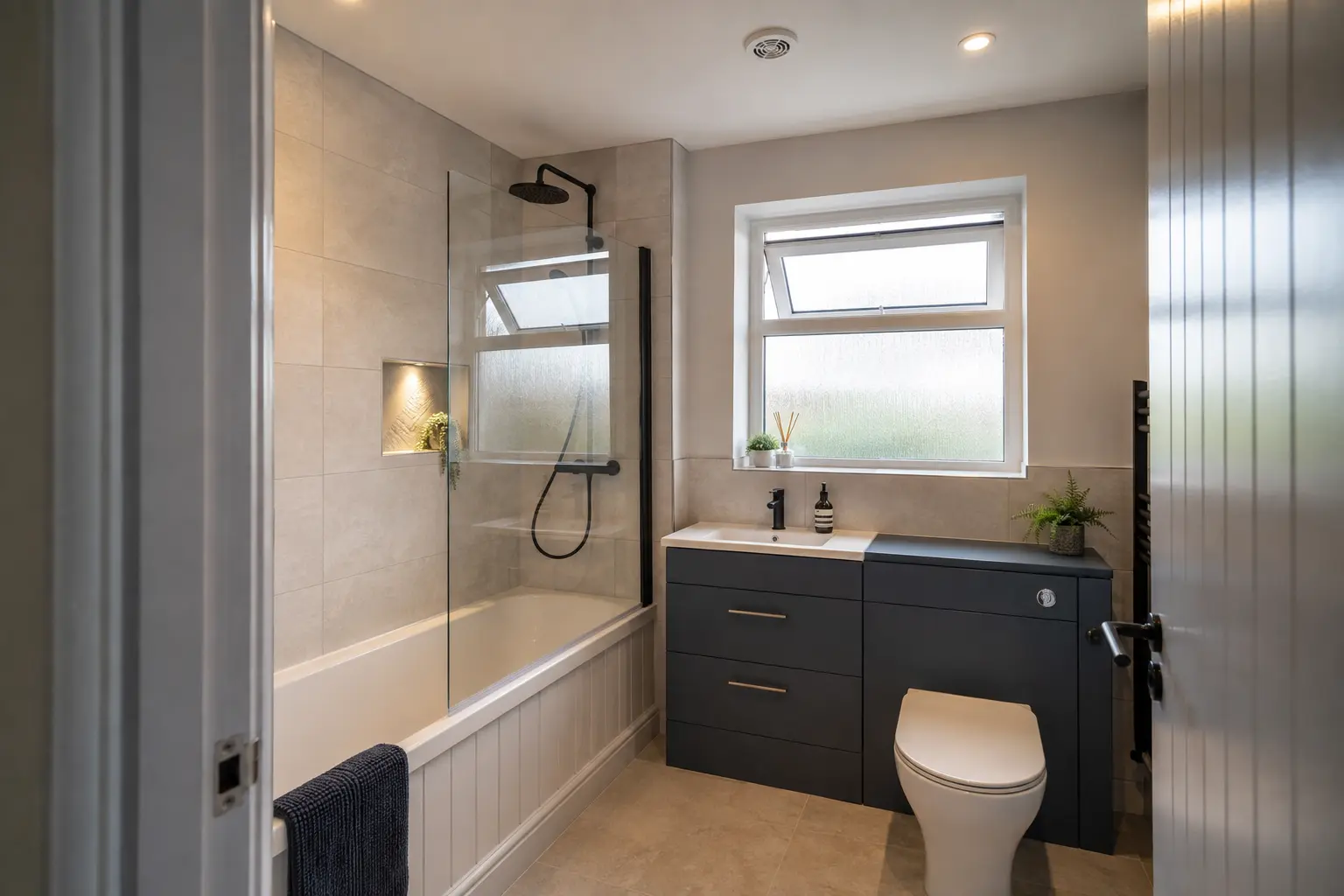
Reducing Bathroom Condensation
Use the bathroom fan and let wet surfaces dry, and investigate damp that keeps returning.
Understand why surfaces become wet
Warm, moist air can leave water on cooler surfaces such as mirrors, windows and walls. Bathrooms produce moisture during bathing and showering, so some short-lived misting is common. The concern is moisture that lingers, keeps returning in the same damaged area or leaves materials persistently wet. Note where it occurs and how long the room takes to clear.
Do not assume every damp mark is condensation. Leaking pipes, failed seals or water entering elsewhere in the building can produce similar signs. If a patch remains wet when the bathroom has not been used, or the ceiling below is stained, arrange an investigation. Fresh paint and new wall panels do not correct an unknown source of water.
Use the bathroom fan as instructed
Check that the bathroom fan works and that its normal controls are understood. Some continue running after a light is switched off or respond to moisture in the room. Follow the instructions for the installed product. Turning it off before it has completed its intended operation can leave more damp air behind.
If the fan seems weak, noisy or ineffective, have it and the pipe carrying air outside checked rather than simply buying a larger fan. Air needs a suitable way to leave the building, and the installation needs to suit the room. A fan that runs is not proof that the full ventilation arrangement is working as intended.
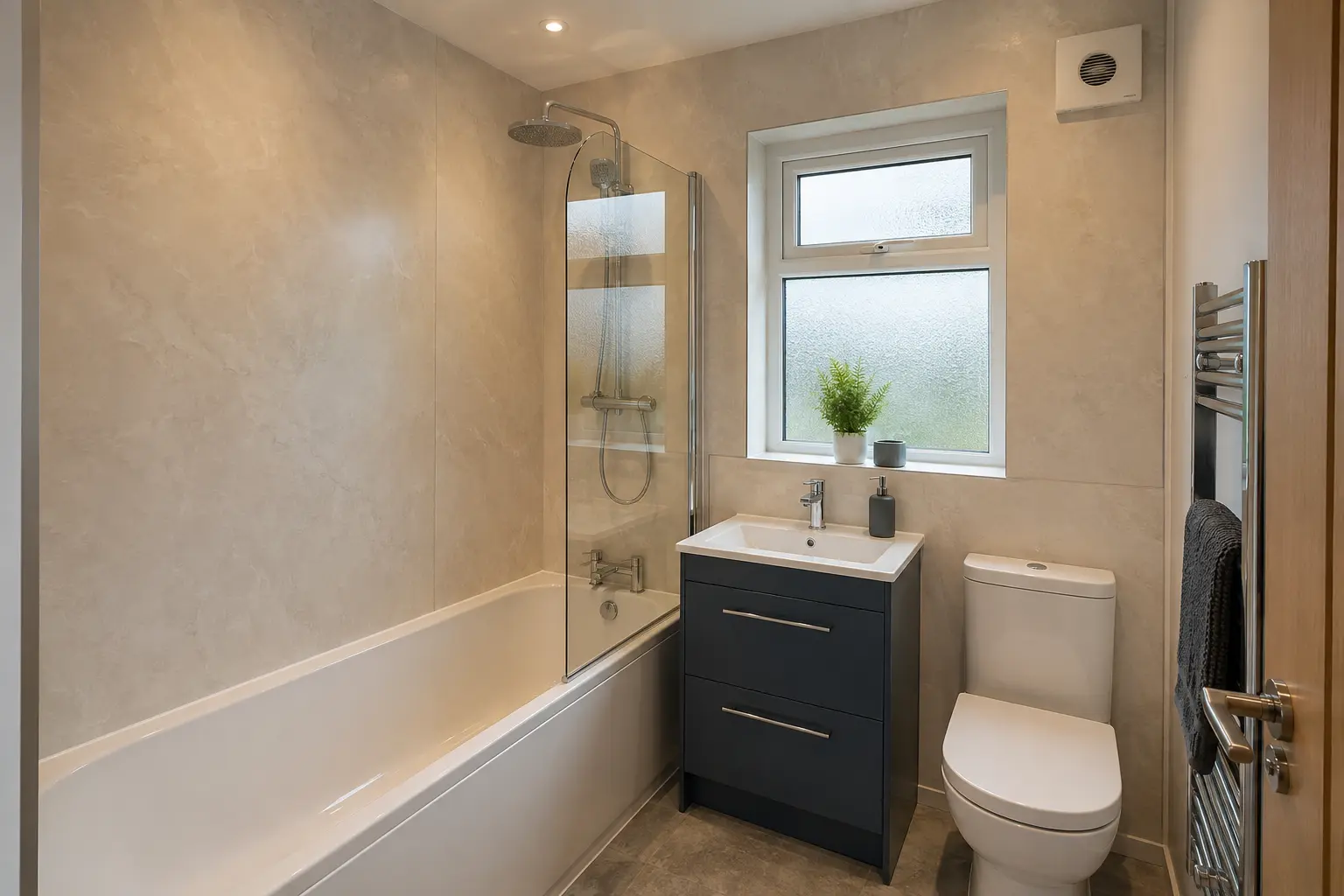
Let the room dry after use
Wipe standing water from suitable surfaces using the care instructions for their finish. Hang towels so they can dry instead of leaving them bundled on the floor. Keep the drain and shower area clean enough for water to flow away normally. These ordinary habits reduce lingering moisture, although they cannot replace appropriate ventilation.
Where a window can be opened safely and practically, it may help air the room. Do not rely on an open window as a universal substitute for the required extraction system. In cold weather or for privacy reasons, household use may be different from a summer routine. Discuss ventilation that works for how the bathroom is actually used throughout the year.
Check cleaning and airflow around stored items
Crowded shelves and furniture pressed into damp corners can make cleaning and drying more difficult. Keep everyday storage useful without covering fan grilles or other intended air openings. If damp repeatedly appears behind a cupboard, explain that when the room is inspected. The cause may involve the surface or building as well as household storage.
Follow product instructions when cleaning a fan cover or grille, and turn the power off as directed before any permitted maintenance. Do not reach into electrical parts or attempt wiring repairs yourself. If access is awkward, ask about a suitable arrangement during the refit. A fan that cannot be maintained easily may be neglected even when it was correctly chosen.
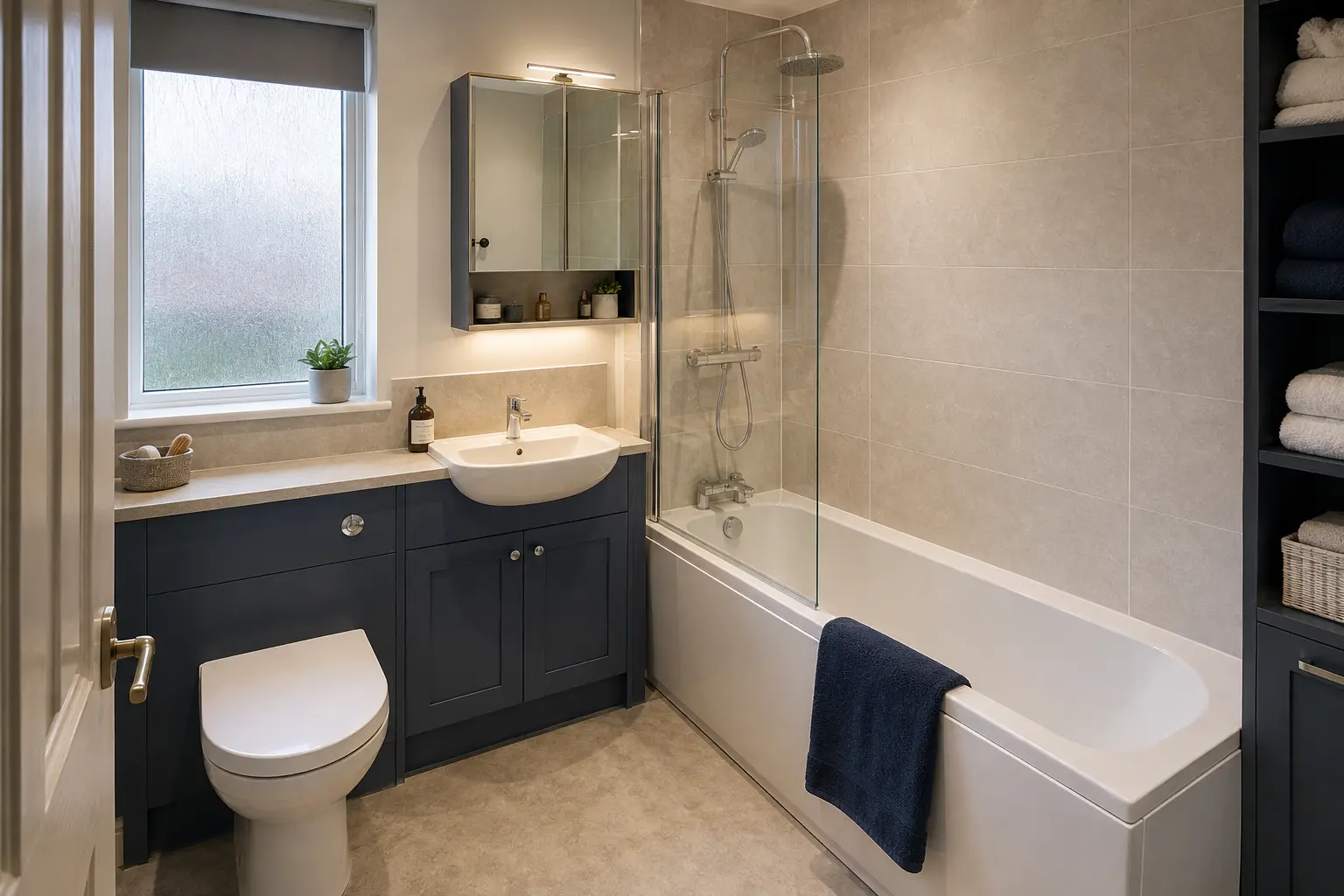
Investigate mould and recurring damage
Recurring mould or damaged finishes should prompt attention to the moisture source. Cleaning a visible patch does not establish why it appeared. Follow appropriate cleaning guidance for the surface and seek suitable help where the problem is extensive, persistent or associated with a leak. Avoid mixing cleaning chemicals or using a product without checking its instructions.
If the property is rented or the issue may involve shared building parts, report the problem through the relevant maintenance arrangements. Keep photographs and a short record of when it occurs. This helps explain whether the mark changes after showering, heavy rain or another event, without trying to diagnose hidden building conditions from appearance alone.
Include ventilation in a bathroom refit
A renovation is a useful opportunity to review the fan, the pipe carrying air outside and the controls before new finishes are fitted. Tell the installer about lingering steam, unusual noise and damp areas. Ask which changes are proposed and whether the relevant electrical and building work is included in the quote. Do not leave the discussion until the ceiling or walls are complete.
The outlet route and any shared-building requirements need checking before alterations. If more investigation is necessary, agree who will arrange it. Choose wall finishes for their suitability and upkeep, but do not treat a water-resistant surface as a replacement for drying the room. The finish and ventilation do different jobs and need to work together.
Keep a simple record if the problem continues
After changes, note whether the room clears more effectively during normal use. If the same area remains damp, report that rather than repeatedly repainting it. Record which fan setting was used and whether anything else has changed, such as a new shower or a blocked grille. Specific observations are more useful than saying the bathroom always feels damp.
Keep the fan model and care instructions with the bathroom paperwork. Ask how to use its controls and when maintenance is needed. A manageable routine combines working ventilation, sensible drying and prompt attention to leaks. It should not depend on accepting persistent damage as an unavoidable part of having a bathroom.
Planning this work in Derry? See our bathroom ventilation in derry page for the service and how to request a quote.