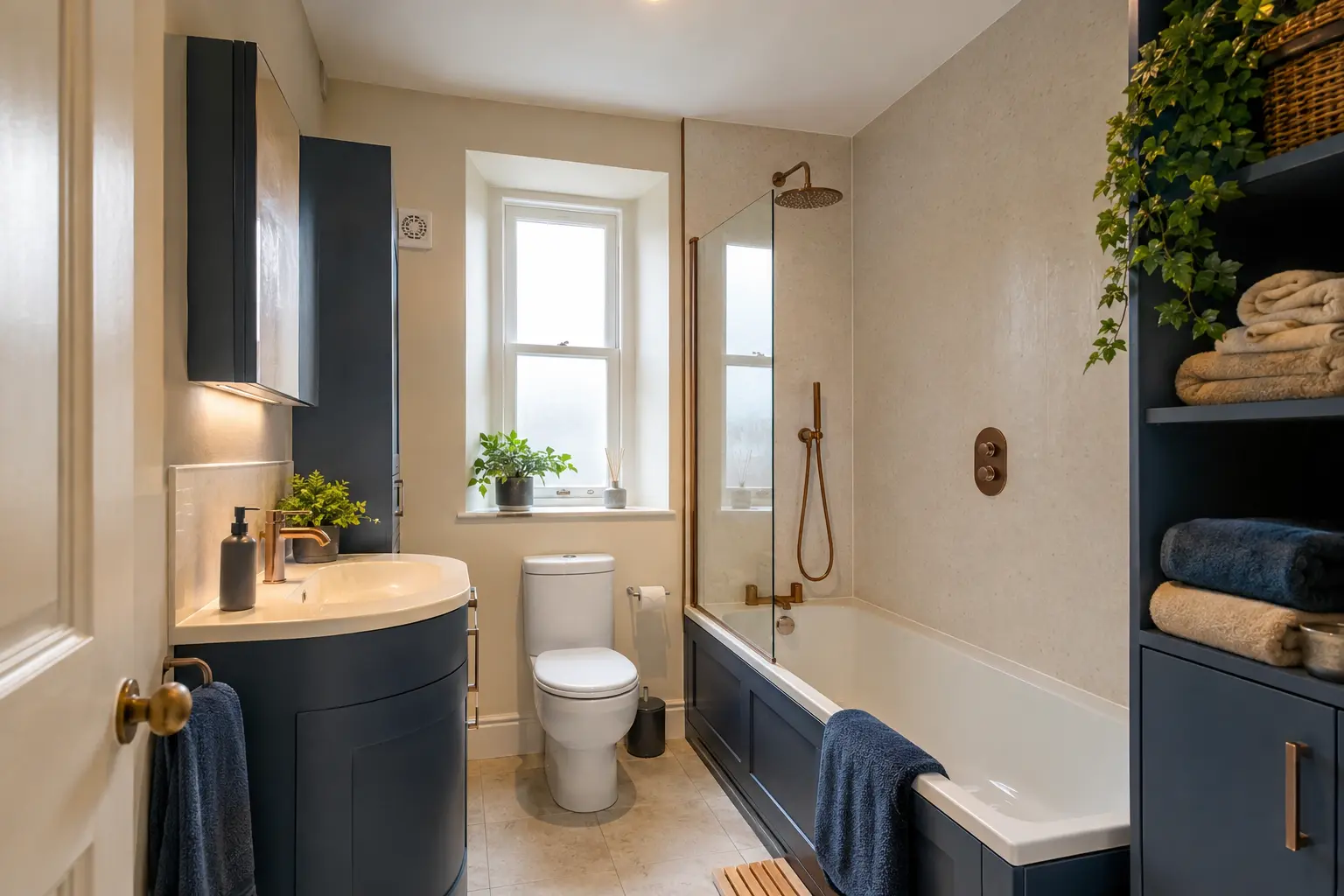
Signs an Old Bathroom Needs Replacing
Leaks, damaged surfaces and fittings that are difficult to use can justify more than a cosmetic update.
Separate wear from a developing problem
An old-fashioned colour does not by itself mean a bathroom needs replacing. A working bath, basin or toilet may still suit the household. Start by listing what is actually wrong: recurring leaks, loose surfaces, difficult access or fittings that cannot be cleaned properly. This helps distinguish a style preference from work needed to make the room usable again.
Check whether the problem belongs to one item or several parts of the room. A failed tap may need a repair or replacement without a full refit. Several worn fittings alongside damaged walls may make a wider renovation worth discussing. The decision should follow an inspection and a clear comparison of the work, not simply the age of the bathroom.
Take recurring leaks seriously
Water appearing around a tray, below a basin or on the ceiling underneath needs investigating. Wiping it away or adding more sealant may hide the symptom without fixing the source. Note when the water appears and which fitting was used, but avoid dismantling connections unless you are qualified to do the work.
If a leak is active, stop using the affected fitting and seek appropriate help. Keep water away from electrical fittings and do not touch equipment that may be wet. A refit may be needed to access damaged areas, but replacing the entire bathroom is not automatically the answer. Ask what caused the leak and what parts need repairing before choosing new finishes.
Look for loose or damaged surfaces
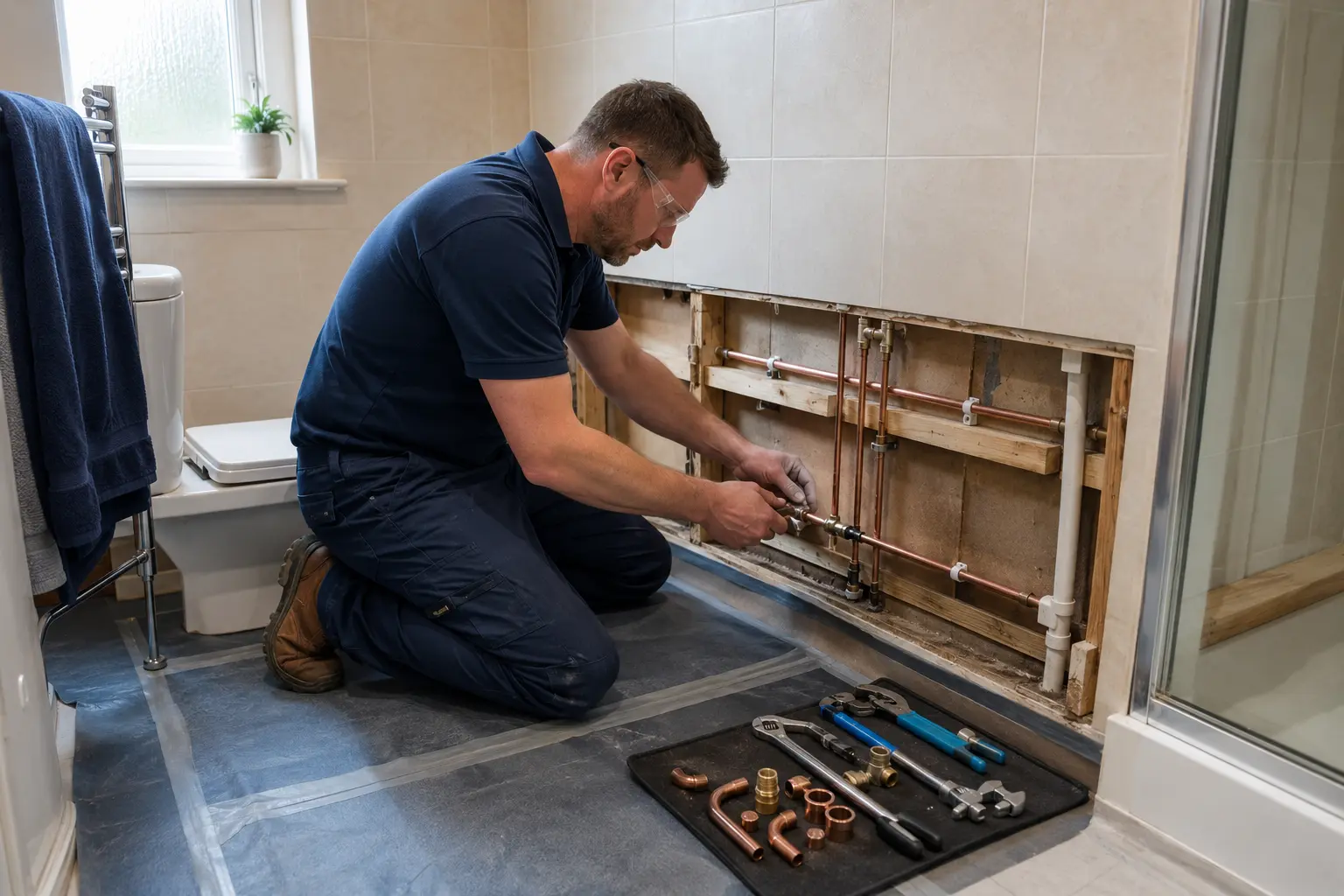
Cracked grout, lifting flooring and loose tiles can have different causes. A single damaged tile is not the same as movement across a whole floor. Explain where the issue occurs and whether it has changed. If the surface feels soft or unstable, keep off the affected area and arrange an inspection rather than covering it with a mat.
The repair may need access underneath the finish. That can affect adjacent fittings and the repairs to walls and floors needed afterwards. Ask whether a local repair is practical and whether matching materials are available. If the damage is widespread, discuss the full preparation needed so new panels, tiles or flooring are not fitted over a weak base.
Notice when the layout no longer works
A bathroom can function mechanically but still be difficult to use. Stepping over a bath side, reaching behind a screen or moving around a badly positioned basin can become a daily problem. Describe the movement that causes difficulty. This gives the person planning the room something specific to solve.
Changes might include a shower, better-positioned controls, shallower furniture or more storage. They need checking against the room dimensions and pipe positions. Do not assume that every walk-in shower has a level entrance or that a larger tray will fit comfortably. Where personal support needs are involved, suitable specialist advice may be necessary before the layout is agreed.
Investigate damp before choosing a new finish
Persistent condensation, mould or a musty smell should prompt a check of the cause. Moist air, cold surfaces and leaks can all contribute. Tell the installer whether the problem is seasonal, whether the fan works and whether a particular wall stays damp. A new wall panel will not correct an unresolved source of moisture behind it.
Ventilation and cleaning are part of keeping a bathroom in good condition, but they are not substitutes for repairing a leak or damaged building material. Agree any necessary investigation before decoration hides the area. If work outside the bathroom is needed, clarify who will arrange it and how that affects the proposed bathroom installation.
Compare repair and replacement fairly
Ask for the difference between repairing the existing bathroom and replacing the relevant fittings. Compare preparation, removal and finishing as well as product prices. A small repair can become less straightforward if access requires disturbing several surfaces, but that should be explained rather than used as a reason to replace everything without inspection.
Think about what you would keep if it is sound and compatible with the new work. Check whether older fittings can be removed and refitted and what happens if removal damages them. Record the agreed plan in the quote. A worthwhile renovation solves the faults and daily frustrations you identified, rather than simply providing a newer version of the same awkward room.
Keep a useful record for the visit
Take ordinary photographs of visible damage and note when you first noticed it. Include any previous repairs, especially if the same leak has returned. You do not need to diagnose the problem yourself. A short history helps the person inspecting the room understand what has already been tried and which areas deserve closer attention.
Bring that record to the bathroom appointment with your list of priorities. If the room still works safely, there may be time to compare suitable options carefully. If it has an active leak or unsafe surface, deal with that immediate problem before waiting for a complete design and product selection.
Planning this work in Derry? See our bathroom renovations in derry page for the service and how to request a quote.